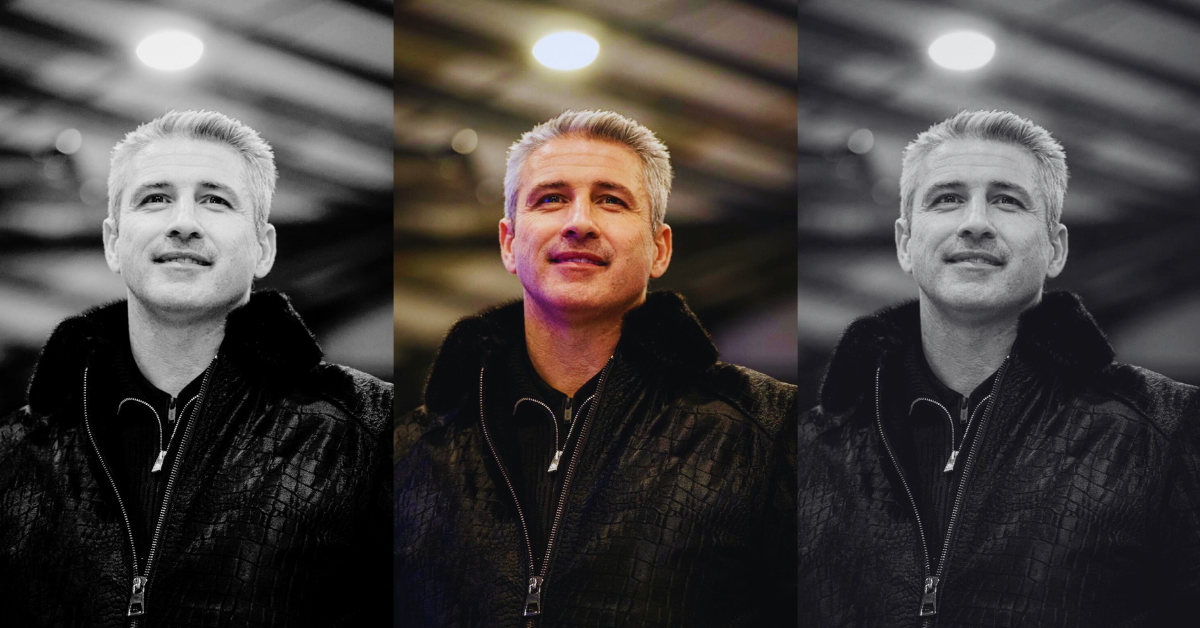
Clive Myrie is a multi award-winning journalist and one of the most recognised faces on TV. Before he hosted our Community Awards last month, we caught up with him to talk about his journey from a small town in the north of England to foreign correspondent and news presenter at the BBC – as well as the host of the long-running TV quiz show Mastermind
As Told To: Selma Day
What inspired you to go into journalism?
I grew up in a little mill town in Lancashire. I had a paper round and I would see these different stories popping up in the papers – in South Africa, America and all over the world.
It captured my imagination. And our family loved the reporter Alan Whicker, who had a travel series called Whicker's World, which was a documentary, travel and journalism all mixed into one. I was just fascinated by the places he went to. And I thought, yeah, that's something I'd like to get into as well.
But watching the television, I didn't really see anyone who looked like me. Then I turned on the TV, and there was this bloke called Trevor McDonald and I thought, oh my God, he sounds quite posh – a little bit like my mum is on the phone. And I thought, you know what? It is possible perhaps for someone of colour to get that kind of position. And from that moment on, I decided that I wanted to do journalism.
Why a foreign correspondent?
I realised there was a whole world out there and I wanted to explore it. I wanted to travel and meet people and tell people's stories from around the world. So I settled into this idea of becoming a foreign correspondent.
What was your first big story?
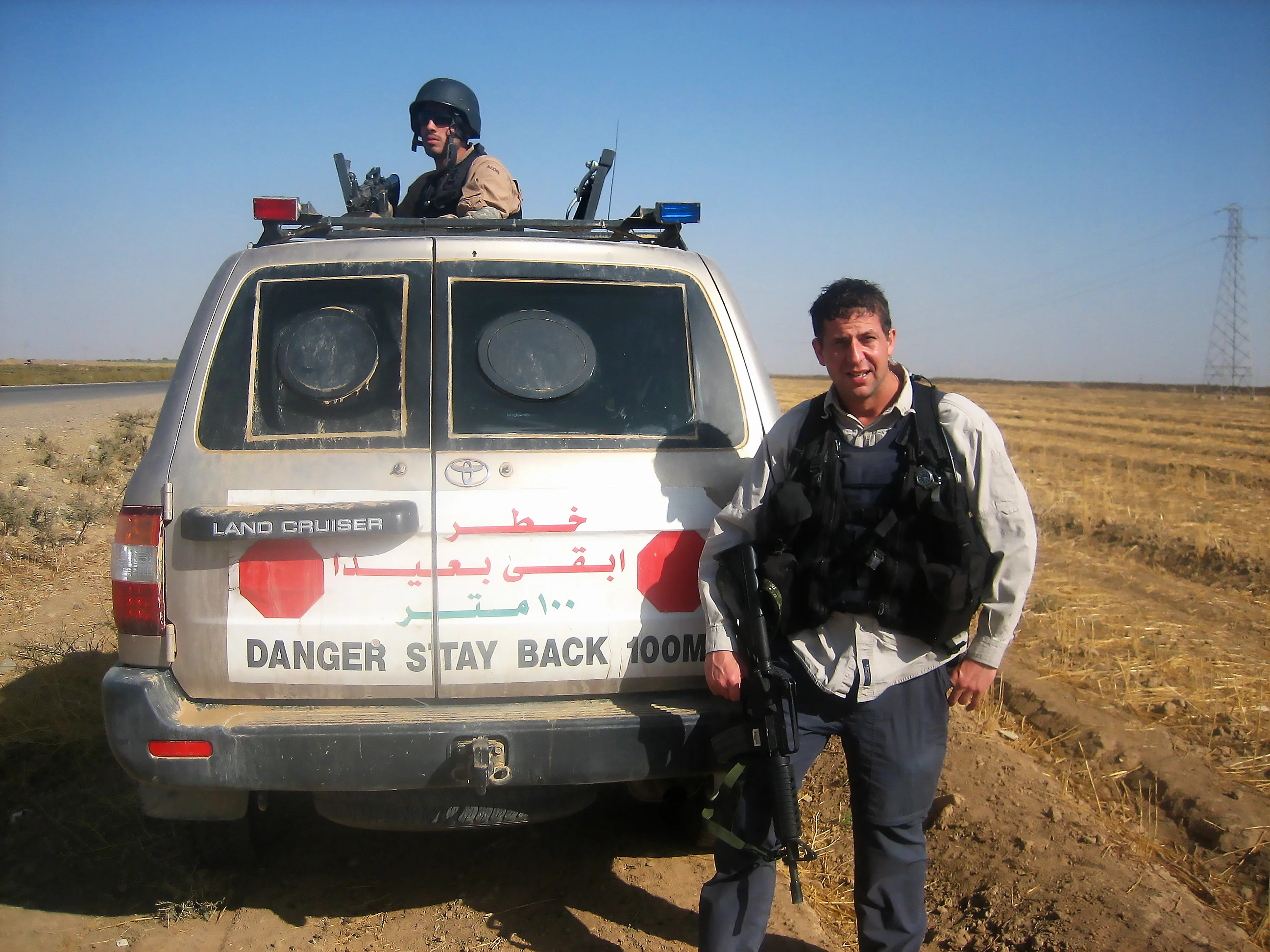
I'd done things for radio as a junior reporter – I covered the fall of CeauČescu in Romania. I was in Northern Ireland, covering the Troubles. But my first big break in television came when I came up with the idea of going to west Africa and reporting on the horrible civil war in Liberia.
I hadn't seen us [the BBC] covering that story in any great depth, and that's partly why you need diversity within the ranks of the reporters, because they're going to have different ideas about what's important.
And I managed to get an interview with the warlord there, Charles Taylor, which the BBC recognised as an amazing thing. And the rest is history. I've tried to tell stories that a lot of other people aren't really looking at over the years. But I also just love those big, mega stories that everyone is talking about, whether it's US presidential elections, tsunamis, World Cups or wars.
Do you still get the same buzz as you used to from your work?
You know, I'm an old bloke now. I would never say no to the BBC if they said: ‘Can you go and cover this war?' But I don't think I'm necessarily the first to put my hand up these days.
I still like telling stories, but sleeping in a tent in the middle of a battlefield, or sleeping in the open in the middle of Iraq during the Iraq war, that kind of thing, I'm a little bit too old for that now.
In terms of diversity, how have things changed?
There is much better representation on screen – there's no question about that. The shop window looks better when it comes to people of colour and, significantly, women. I suppose the problem comes behind the scenes, in the corridors of power. I mean, the gender balance is much better, but when it comes to black and brown representation, LGBTQ, disability, it's still a little bit tricky.
I think the current figures are something like 13 or 14 per cent ethnic minority representation within the BBC, which is the national average. So that is good. But where are those people? There are a lot of black cleaners around when I'm leaving at about 10.45pm after I've done the 10 o'clock news. So there's a lot of work still to be done.
What have been the highlights of your career?
There have been so many. I've been so fortunate to be able to travel along the Silk Road and through the Hindu Kush from northern Pakistan into Afghanistan when the Taliban first took over in 1996 – to make that journey was what I'd always dreamed about. The travel and being able to see other people and other places and broaden my own horizons and understanding of what it means to be a human being have been the highlights of my career.
Standout moment?
There's one that I always do go back to, which was being in Atlanta, Georgia, in 2007 for the election of Obama. I was at a historic black college called Morehouse College. Samuel L Jackson went there. Spike Lee went there and Dr Martin Luther King went there. It was a crucible of the civil rights movement and if Obama was to win, he was standing on the shoulders of people who had been to that university.
Then all the results came in, and a black man was going to become the most powerful man on Earth, a man with dignity and humanity who was going to face a hell of a lot of problems because of his colour.
And David Dimbleby, who was presenting the American election special, came over to me when the results came through. I just looked around me and everyone was crying. It was absolutely astonishing. People were shaking their heads. They couldn't believe a black man named Barack Hussein Obama was going to become the most important man on Earth.
So I'm live on television and at one point I said: “I have to say, David – for me to be a black man, to be here in this place at this time in the south is an absolute privilege for me.” Then the line went down and David moved on to something else. I put the microphone down and I thought, oh my God, I've just made one of the most important elections in history all about me. I felt a bit of an idiot.
But then I turned around and I saw Steve Osunsami who was the national correspondent for ABC News. He was live on air to about 25 million people and he was babbling like a baby. And I just thought, I hadn't crossed any bloody line at all.
How difficult is it to remain impartial?
At the end of the day, you're trying to reflect the diversity of opinion that's out there on a whole range of subjects. But it's much more difficult than it used to be, because so many more people now are not actually interested in impartiality. They want their own point of view reinforced, and they can get that any second of the day by clicking online. But the BBC has been in existence for 100 years because it has stuck steadfastly to that commitment to impartiality.
How did you feel when you got the Mastermind gig?
That was amazing. The aim of the show is not to have entertainment value out of you failing, or laughing at you because you don't know the answer to X, Y or Z. They were looking for much more of an understanding of what it is to be sitting in the black chair, which is just horrific, and having me willing you to do well. And that fitted my personality. So, yeah, they got in touch, I did the screen test and the rest is history. I love it – it's incredible to be part of such an iconic show.
Is there anything that you haven't achieved that you would still like to do?
I've been very lucky. I have worked very hard over the years, and it has been something that I've enjoyed, thankfully. I have done the kind of travel and exploring that I wanted to do when I was at my little paper round. I suppose, just trying to get better at what I'm actually doing now.
What is it like being you – the best thing and the worst thing?
It's hell being me! The worst thing is being submerged in the detail of these incredibly troubling times on so many levels and seeing so much that is depressing and not life-affirming on so many levels.
But getting out and meeting ordinary people is what I love. They are sitting there every night at 10 o'clock watching the news – they see you, but you don't see them.
So I love being on the road talking to people to find out what they enjoy and appreciate in our news coverage, what they don't like, what makes them angry, what they think the BBC should do differently and how I can improve in telling them how the world works.