London is home to some of the wealthiest – and most philanthropic – people in the world. In this series of interviews, we ask why they do it and how to encourage others to give
As told to Selma Day
How does running your charity compare to success in business?
It’s very, very different. Success in business is more hard-headed and measurable in terms of money and prestige. The charity, although it’s still quite hard-headed in running it commercially, it’s got a really soft side – an empathetic side.
The business success gives you pride, success and money but it doesn’t give you a spiritual reward. The charity still gives you success, but in a different way. It gives you no money – in fact, it takes your money, but gives you spiritual success.
It must be incredibly rewarding to know you are making a difference?
It is hugely rewarding. I regularly meet parents and they’ll come up to me and say what an amazing difference we’ve made to their child. And that really is a motivator – not that I need to be motivated. I don’t feel I’ve got an option. I don’t feel I’ve got a choice. But when I get that warmth and gratitude from somebody whose life I’ve helped to change, I know even more why I do it.
Do you run the charity in an entrepreneurial way?
The charity has always been very entrepreneurial in its makeup – in the way that we’ve tried to find new ways of fundraising, and also in the accountability, because everything we do should always be the very best deal, therefore making the donors’ money spread the furthest it possibly can.
And it’s one of the reasons I fund the operating and administrative expenses, because nobody has to worry that their pound is getting diluted down in wages or cars or whatever.
As someone in your position, do you feel a responsibility to give back to society?
I don’t like the term “giving back” because it implies you’ve got an onus to do that. And I don’t think anybody’s got an onus to do anything. I never think about it as giving back – I don’t feel the need to give back. If you say you’re going to give back, it makes it sound as though you’ve had something. I haven’t had anything – I’ve fought like fury for my wealth. But I do feel compelled to make other people’s lives better and am privileged to do so.
You’ve pledged 70 per cent of your wealth to charity as part of the giving pledge. Why?
Well, when I sold the business in 2006, I ended up with about £1.2 billion. And I thought, what am I going to do with that, because I knew I didn’t want to leave it to my descendants. I didn’t want to leave them with no money. But I didn’t want all of that going [to them]. And it was a burden. I mean, it literally was a burden.
And I thought, what am I going to do with all this money? And I realised that the right thing to do was to pledge to give it to charity.
So I decided to give 50 per cent away to charity during or after my lifetime. And then some years later, Bill Gates and Warren Buffett set up the Giving Pledge. So I thought, well, I’ve already done that so I might as well join them. Then maybe two or three years later, I thought 50 per cent wasn’t enough, because it would still leave me giving too much away to my descendants. So I increased it to 70 per cent. I’m not necessarily finished there – it depends on how much money I make with my commercial projects. The more money I make, the more likely I am to increase the percentage.
There’s a perception that philanthropy is a luxury of the wealthy. Do you agree?
What’s wrong with some luxury if you are helping? I always say to people, it doesn’t matter what your motive is in life – it doesn’t matter whether it’s pure philanthropy, whether it’s to be seen to be philanthropic, or whether it’s to chase an OBE, CBE or a knighthood. It doesn’t matter what you call it, because those kids are not bothered what your motive is. If your motive is pure heart, then that’s wonderful. But the kids don’t know any different. So it doesn’t really matter. If you want to be seen putting your hand up and everybody thinking you’re wonderful, that’s great – you are wonderful. Whatever your reason is, just do it. Because those kids are all going to be grateful for the way you’ve changed their lives.
How do you encourage other people to get involved?
Just do it and take the honour. You can be a private giver. But I encourage people to be public, because we all need to influence each other and it can be contagious. If we could get to a point where the majority of billionaires were in the Giving Pledge, the ones that weren’t would be positively influenced to join. Now, you can sit round a table with 10 billionaires, and less than one in 10 is in the Giving Pledge. But just imagine if seven in 10 were in the Giving Pledge – the other three would probably feel a bit mean.
Are young people interested in philanthropy?
I think before you can be massively philanthropic, you’ve got to make your own money and make your own life. I wasn’t philanthropic, really, until I was about 40 years old, when I was able to fulfil the second part of my ambition, to be philanthropic – the first being to be wealthy and successful. It doesn’t mean you don’t do kindness, or you don’t donate a bit here and there. Even if it’s only a pound in a raffle tin. Everybody can do a tiny bit.
Caudwell Children’s star-studded Butterfly Ball “Fantasia 3” will take place on March 22. Places are limited and by application only.
For more information, visit caudwellchildren.com and follow @ccbutterflyball on Instagram for updates.
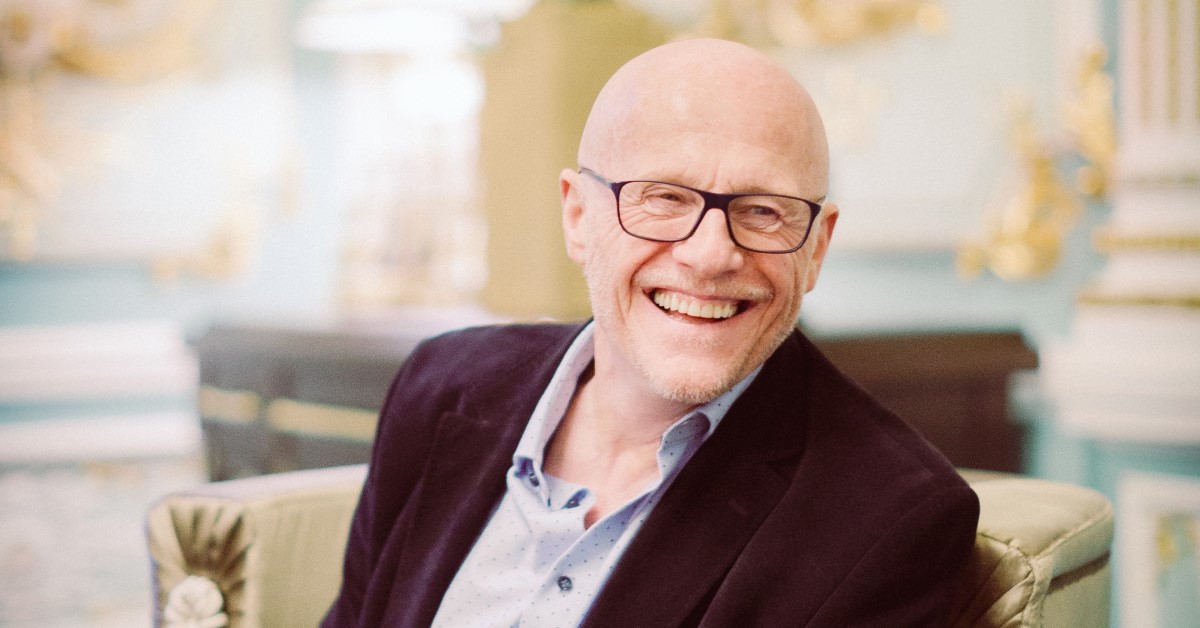
John Caudwell
Mayfair resident and self-made billionaire John Caudwell devotes most of his time to his lifelong philanthropic ambitions and, as a signatory to the Giving Pledge, he is committed to donating at least 70 per cent of his wealth to charitable causes during and after his lifetime. Having achieved success with his businesses, including Phones 4u, he set up his own charity, Caudwell Children, which aims to improve the lives of disabled and autistic children. More recently, he launched Caudwell Youth, which supports young people aged 11 to 24 with a range of needs, through person-centred volunteer mentoring.