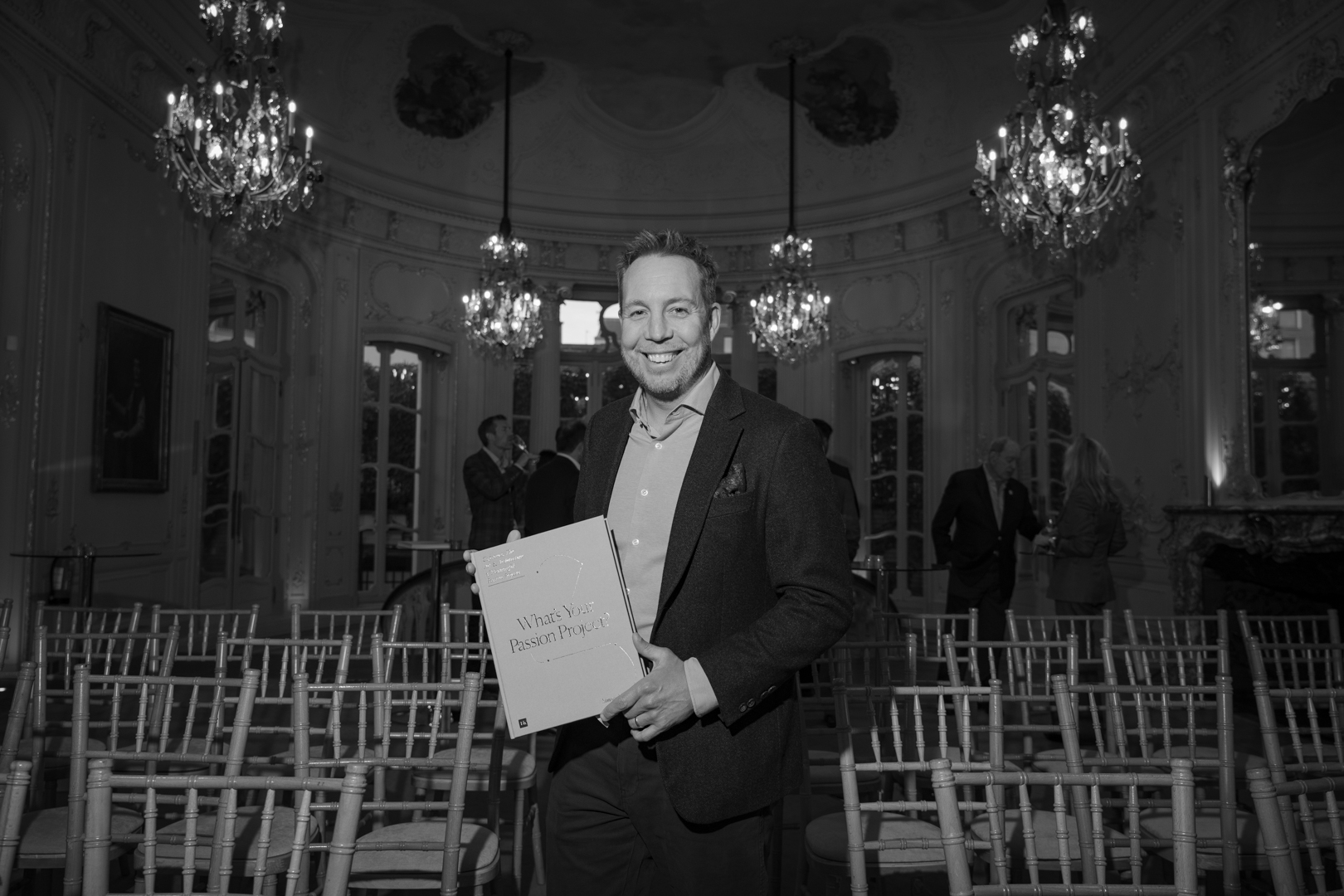

Elected as the new head of Westminster City Council, Paul Swaddle has promised to make the area safer and cleaner. In an exclusive interview, he reveals his blueprint for the borough
Words: Will Moffitt
“What we have is a vanity project being pushed through because someone wants to leave a legacy when they cease to be the mayor of London,” Paul Swaddle says. Westminster’s new leader does not mince his words. Swaddle is straight talking about most things, particularly when it comes to London mayor Sadiq Khan’s pedestrianisation of Oxford Street, estimated to cost between £144 million and £150 million. In Swaddle’s eyes, it’s a “Temu scheme” that has been forced through undemocratically.
“The manner [in which it has been orchestrated] is absolutely unacceptable. The outcomes are not clear,” he says, citing the impact on cyclists, traffic travel times and policing measures as challenges that have not been adequately addressed. He believes the scheme is being implemented without adequate thought or funding.
“There’s just not enough money in it,” he says matter of factly. Having represented the St John’s Wood and Marylebone area as a councillor since 2018, Swaddle became leader of Westminster City Council in May after the Conservatives regained control of the borough from Labour.
Unlike many career politicians, he comes from a business and technology background. According to the council he is the chief executive of a central London software company, who can bring “real-world experience” to local government.

Swaddle seems less concerned about ideological flag- waving and more interested in problem solving. His leadership campaign promised “safe streets”, “a clean city” and “real action”. Upon taking office he has made stamping out crime and emboldening the Metropolitan Police to take swifter action against it a priority. His immediate appointment of Caroline Sargent as a cabinet member for enforcement should help to prioritise the area’s safety and security concerns.
Swaddle will not be drawn on the Palantir debate – Scotland Yard’s proposed £50 million, two-year contract with the US technology corporation to deploy its AI technology has been vetoed by the mayor’s office. “What I want is good policing on our streets and the political football they’re turning that into is not something Westminster can directly influence,” he says. “So, I’ll stick out of it.” Despite swerving that knotty issue, Swaddle is enthusiastic about embracing cutting-edge technologies. He also wants to better utilise existing surveillance systems to proactively respond to crime and antisocial behaviour. The day before we spoke he was in conversation with the Met. “Several London leaders were there bemoaning and questioning facial recognition systems,” he says. “I put my hand up and said: ‘Please come to Westminster.”

Using AI to improve surveillance monitoring is something Sargent and her team are working on. “At the moment there’s only two people watching around 100 CCTV cameras. They’re not going to see very much,” Swaddle says. “We need to use AI to start pulling out the right data. At the moment it’s an overly reactive service. We need to make it a proactive service.”
Luxury watch, jewellery and phone thefts by criminals on bikes and scooters is a London-wide issue, particularly in affluent areas. Better profiling enabled by AI monitoring could help the police catch them faster.
“Take phone thefts. The criminal is normally given a swag bag [to wear], they’re wearing a balaclava, they’re on a very specific type of ebike, which can do 50 miles an hour,” Swaddle explains. “An AI detection model might say: ‘I’ve just seen [that type of bike] on the Bayswater Road, heading towards Marble Arch.” We move on to the cycling habits of everyday Londoners. I mention the sea of Lime and Forest bikes encircling Hanover and Berkeley squares. How can companies making hundreds of millions let their bikes clog the streets? “We’ve just announced a live data-sharing agreement with Lime, which is them stepping up and doing what’s right… we will know much more quickly where there is overloading of bikes,” Swaddle says. “We will very shortly take bikes off the street that are parked in the wrong place.”

At the end of May he confronted Airbnb and Booking. com to end the “unlawful” and “out of control” letting of properties across the West End. He says while London homeowners are legally permitted to let their homes for up to 90 days a year, he estimates 2,700 properties are probably exceeding that limit.
He met Lisa Marçais, Airbnb’s UK and northern European general manager, and Carlo Olejniczak, vice- president and European manager of Booking.com, to discuss the issue. “We sat down. I laid out the way that I’d like to work. I want them to be a responsible operator,” Swaddle says. “I’ve particularly called for action on social housing. While it’s 90 days in other forms of housing it’s zero if you’re a social tenant. I want action and swift action on that.”
Swaddle seems like someone who wants to talk things through and find solutions rather than push through a preconceived agenda. “It’s grownups in the room. I thanked them for coming,” he says. “I want to work with people to get the best outcome, because working against them doesn’t generally deliver that.”