Boosted by a new butler concept Raffles Jaipur is a hotel fit for a modern day maharaja
Words: Will Moffitt
They’re good at welcomes in Jaipur. It’s one of many things this city in Rajasthan, dotted in India’s North Western corner, does extremely well. Former Maharaja Ram Singh was so eager to make an impression on our very own Prince Albert that he painted the entire city pink for his visit in 1876. It has been known as the “Pink City” ever since.
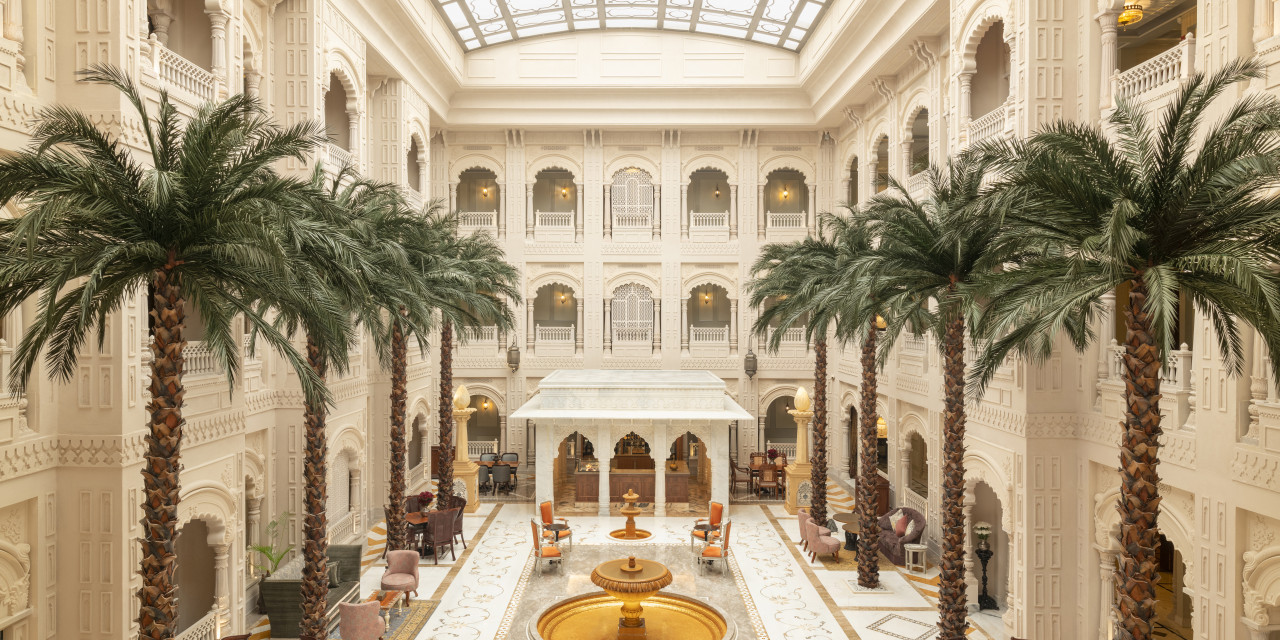
Raffles Jaipur is not pink – its exterior is a washed sandstone – but an entourage of smiling staff, all beaming in regal garb, are there to greet me. Bolted doors swing open onto an opulent central courtyard. It’s a vision fit for a modern day maharaja. Palms rise from white marble floors stretching beyond giraffe height. Above me are angular corridors with Moorish arches — in the mashrabiya style pioneered by Jaipur’s former Mughal overlords.
A relatively recent addition to India’s luxury hospitality scene, Raffles Jaipur opened in 2024, bringing a 50 room ultra-luxury hotel to Kukas, at the quieter edge of this bustling city. I’m here to experience Raffles’s newest ‘Butler Did It’ campaign, which sees the hotel’s butlers curate bespoke itineraries for guests, promising personalised and seamless access to the area’s cultural hotspots.
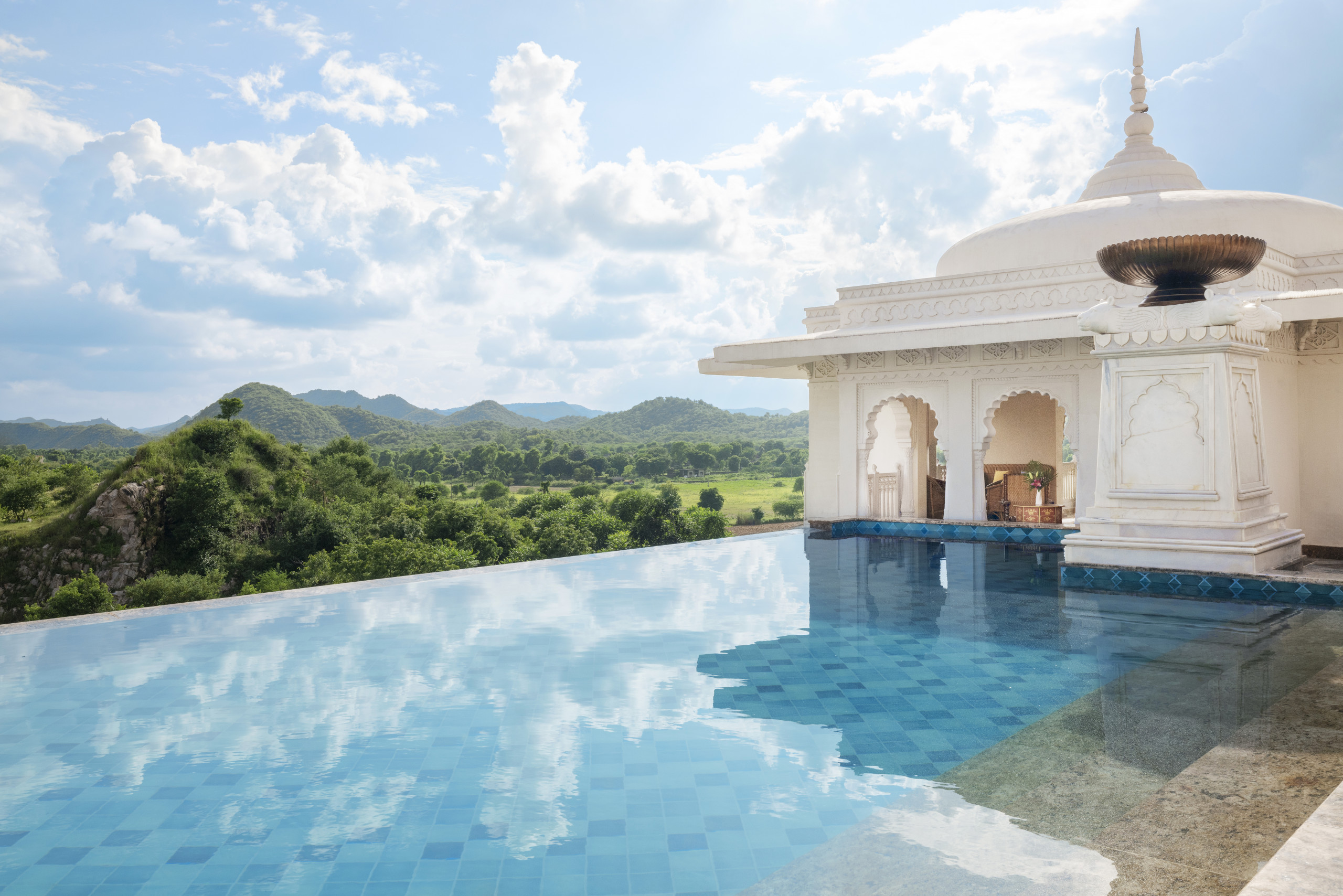
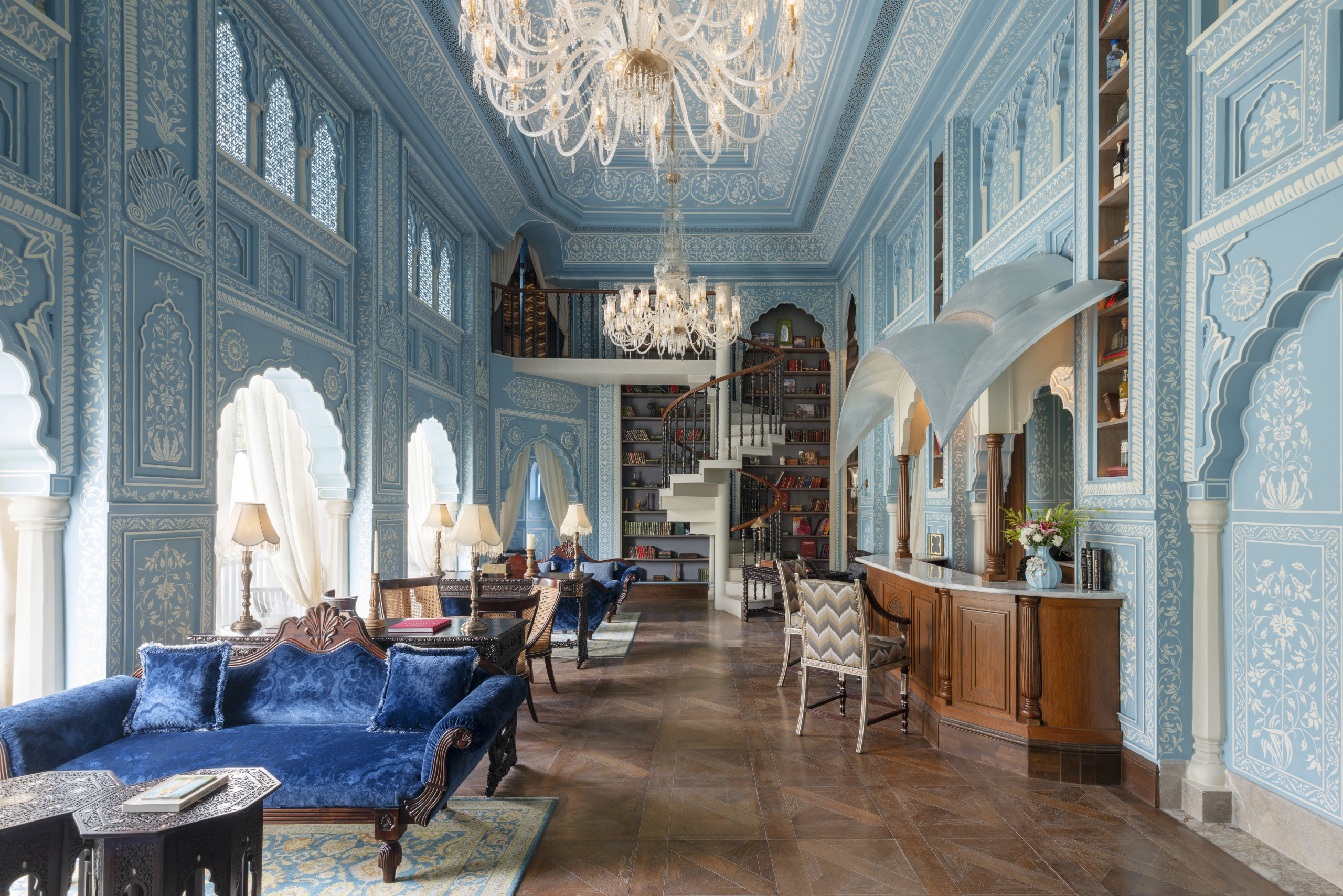
Lead image: the central courtyard at Raffles Jaipur. Above: the hotel pool, below: the magnificent Writers Bar. Photographs by Vincent Leroux
Founded by Sawai Jai Singh II, a vassal of the Mughal Empire, Jaipur was one of the earliest planned cities in modern India. It is a place of coral-coloured palaces, encircled by hills upon which loom forts of faded grandeur.
This backdrop makes Raffle’s palatial opulence feel authentic rather than ostentatious. Its domes, arches, and traditional jaali work are inspired by the grand old forts and havelis you’ll find across the city.
At the hotel’s magnificent Writers Bar the sky blue interiors are inspired by the Chhavi Niwas (blue room) at Jaipur’s City Palace. Stacked with books by literary greats it’s the perfect place to channel your inner Hemingway and sip on a Jaipur Sling cocktail, a pink twist on the classic cocktail concocted at Raffles Singapore.
There are bar snacks galore but ruining your appetite is not advised with Arkaa just down the hall. This restaurant serves plates of North Indian cuisine so delicious they will leave you awestruck. The menus stretch from local staples like Rajasthani lamb (Laal Maas) to vegetable dishes and specials like Himalayan trout with mustard pakora.
The freshness of ingredients, scope of choice and culinary skill are dazzling. The sizzling, aromatic dishes, rich in flavour but not overly spicy, have me rethinking Indian cuisine and how delicious it is when it’s done with such pride and precision.
My butlers Muskan and Harsh — yes I have two — are similarly meticulous. From the moment I arrive they go above and beyond to help enhance my stay, happy to tweak my itinerary to better suit my interests and share their wisdom on local spots to visit; whether it’s tracking down a local delicacy or accompanying me on a winding tour through busy backstreets in search of a fabric atelier or a carpet maker.
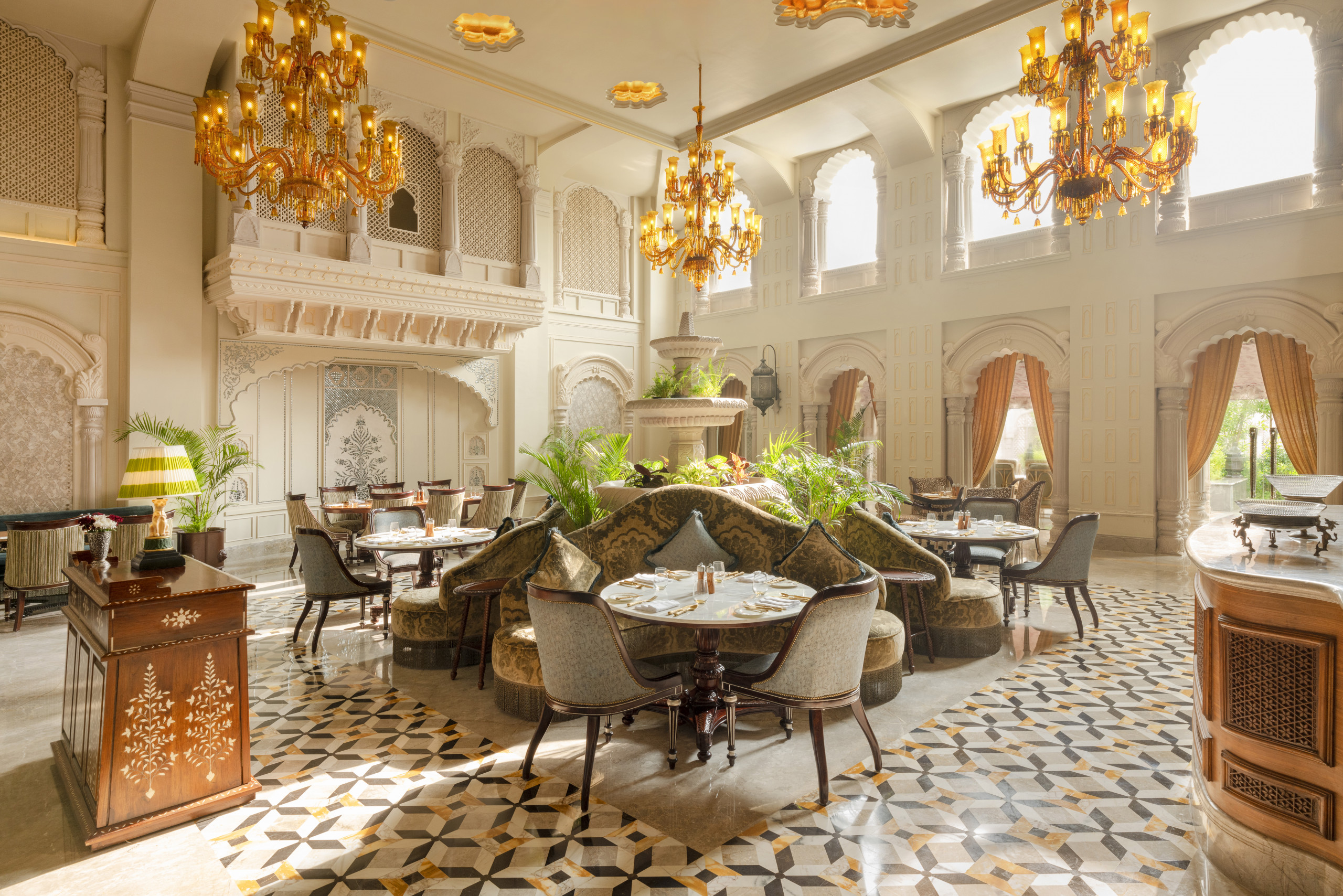
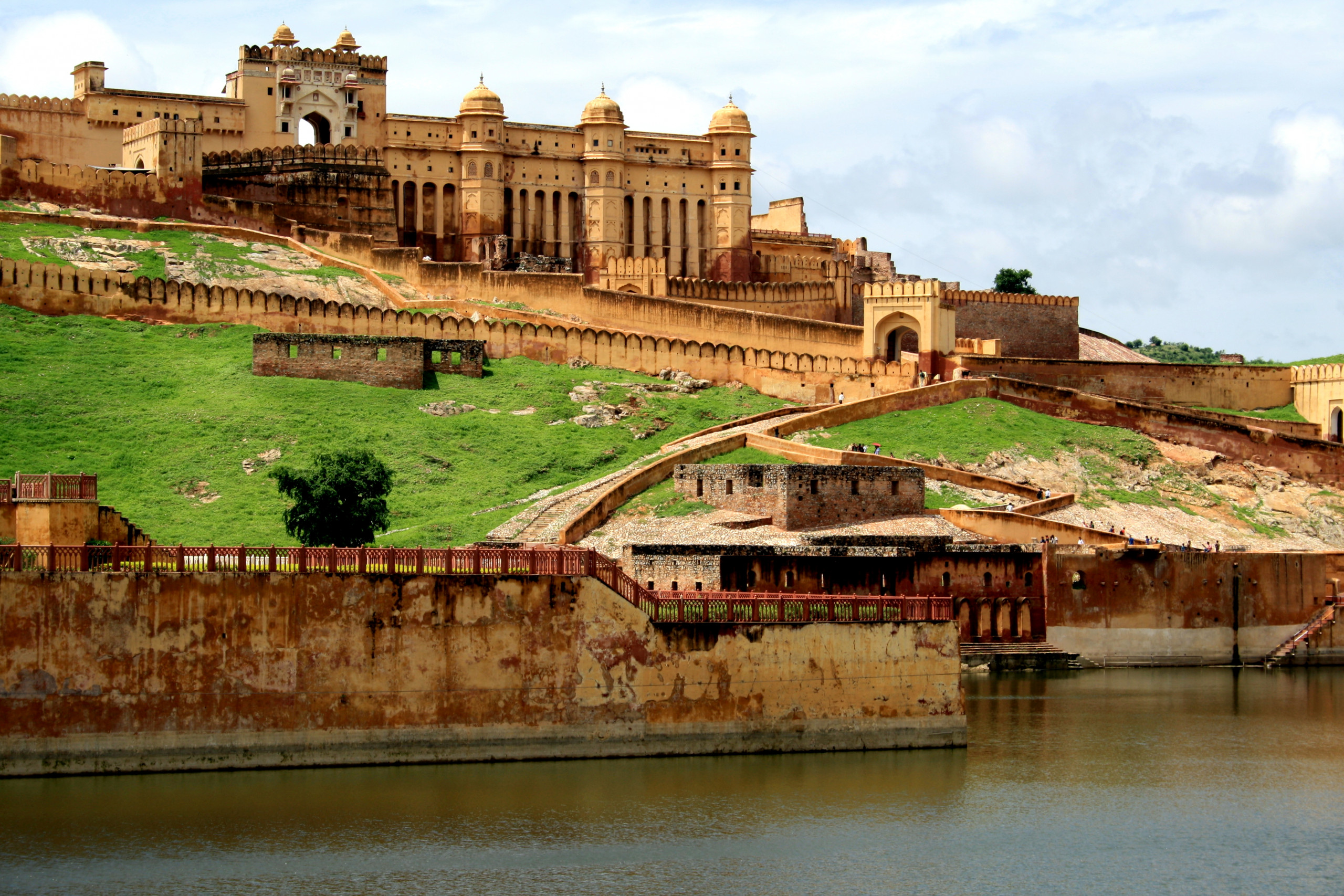
Above: Arkaa (Vincent Leroux). Below: Amber Fort, Ajay Shankar.
I whizz around Jaipur with Muskan, taking in the sights and sounds of this frenetic city. Horn toots and chatter are Jaipur’s looping soundtrack. Cows nonchalantly wander the roads, scooters crisscrossing around them. A man rides a camel through the middle of the street. Nobody blinks.
On our way to Amber Fort, an ancient and regal UNESCO World Heritage site first constructed in 1592, we pass crumbling palaces of old turned to overgrown gardens. We stop at Panna Meena ka Kund, an ancient stepwell designed to harvest rain water. A turtle swims majestically across the deep well.
Thick clumps of scrub cover the hillside like clustered moss, winding up towards the fort. A fusion of Hindu and Mughal styles its pink and yellow sandstone facade shimmers across the water.
Jaipur’s palaces are beyond opulent too. Home to the Jaipur royal family the City Palace, constructed during the reign of Sawai Jai Singh II, is a building of mythical proportions. Grand courtyards and ornate pavilions lead to manicured gardens and temples built in Mughal and Rajput architectural style.
It’s a place made more beautiful by the passing of time; an exotic relic of a lost world where rulers carved their legacies into sandstone, chiselling forever temples of power and prestige.
I’m sad to leave a place of such self-contained beauty but lifted by the sight of Muskan who is waiting to ferry me back to Raffles. My chariot awaits. For one last night I get to eat, drink and sleep like a maharaja again.
raffles.com/jaipur/experiences/A-Journey-Through-Time
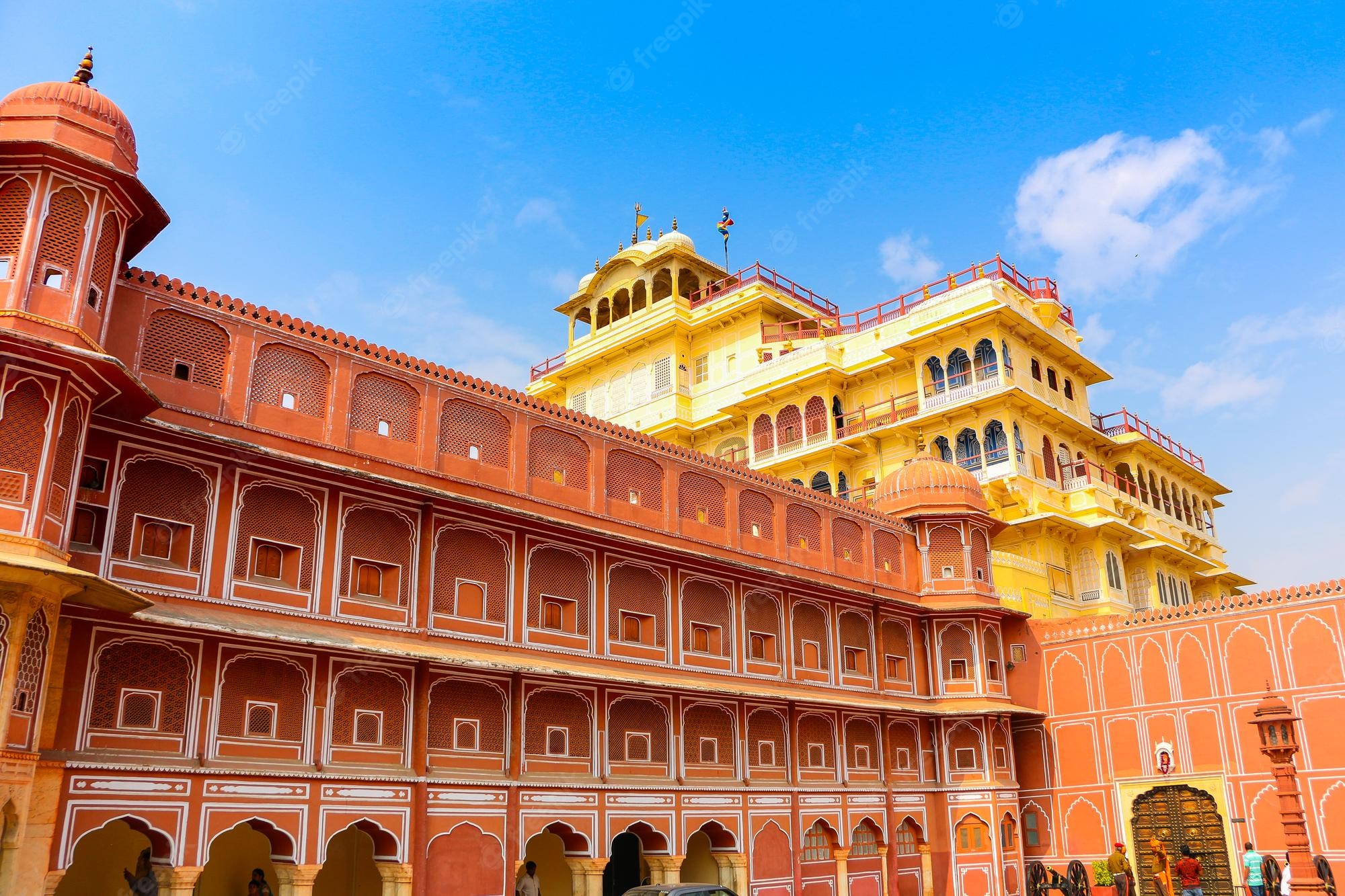
Above: City Palace, Jaipur, Yashaswi Garg.