Sundaram Tagore on why he opened his first permanent London gallery in St James’s

The Indian gallerist, who recently hosted the Mayfair Times south Asian party, opens up about his prestigious family heritage

Sundaram Tagore on why he opened his first permanent London gallery in St James’s
  • Will Moffitt

  • Nov 17, 2026

  • Culture

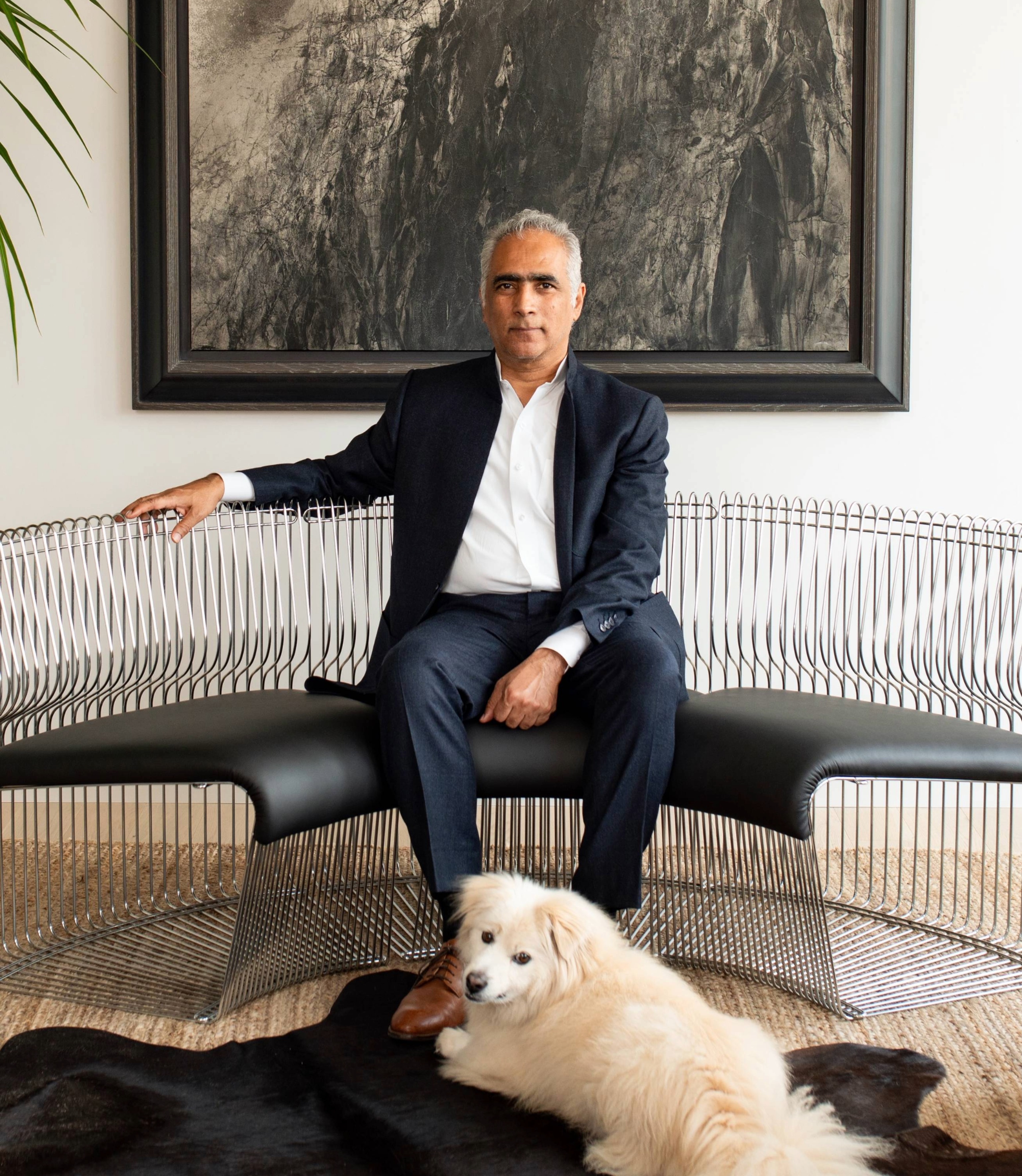
“I’ve always believed in the idea of using art as a vehicle to bring people together. You’re creating a community,” the Indian gallerist Sundaram Tagore says. “Giving back is very, very important. Otherwise it becomes parasitic.”


Tagore and I are chatting in the garden of the Royal Automobile Club on a blustery October day. A light breeze rattles our coffee cups. It’s Frieze Week, one of the busiest periods in any gallerist’s calendar, but he appears calm and sanguine, dressed in a sharp blue Nehru suit. Tagore opened his first permanent gallery in London in May. It’s a capacious two-storey space on Pall Mall that is filled with eye-opening, visually striking contemporary art. Earlier this month it hosted the Mayfair Times Indian party.


Having established galleries abroad, first in New York in 2000 and then in Singapore, opening in London was a bet on a city he believes possesses a magnetic appeal. “I see London as a global playground,” he says. “I’m seeing it more and more. Everyone wants to be here.” From his St James’s gallery, Tagore feels “connected to the established art world” but ably placed “to help shape a new chapter in London’s cultural geography”.
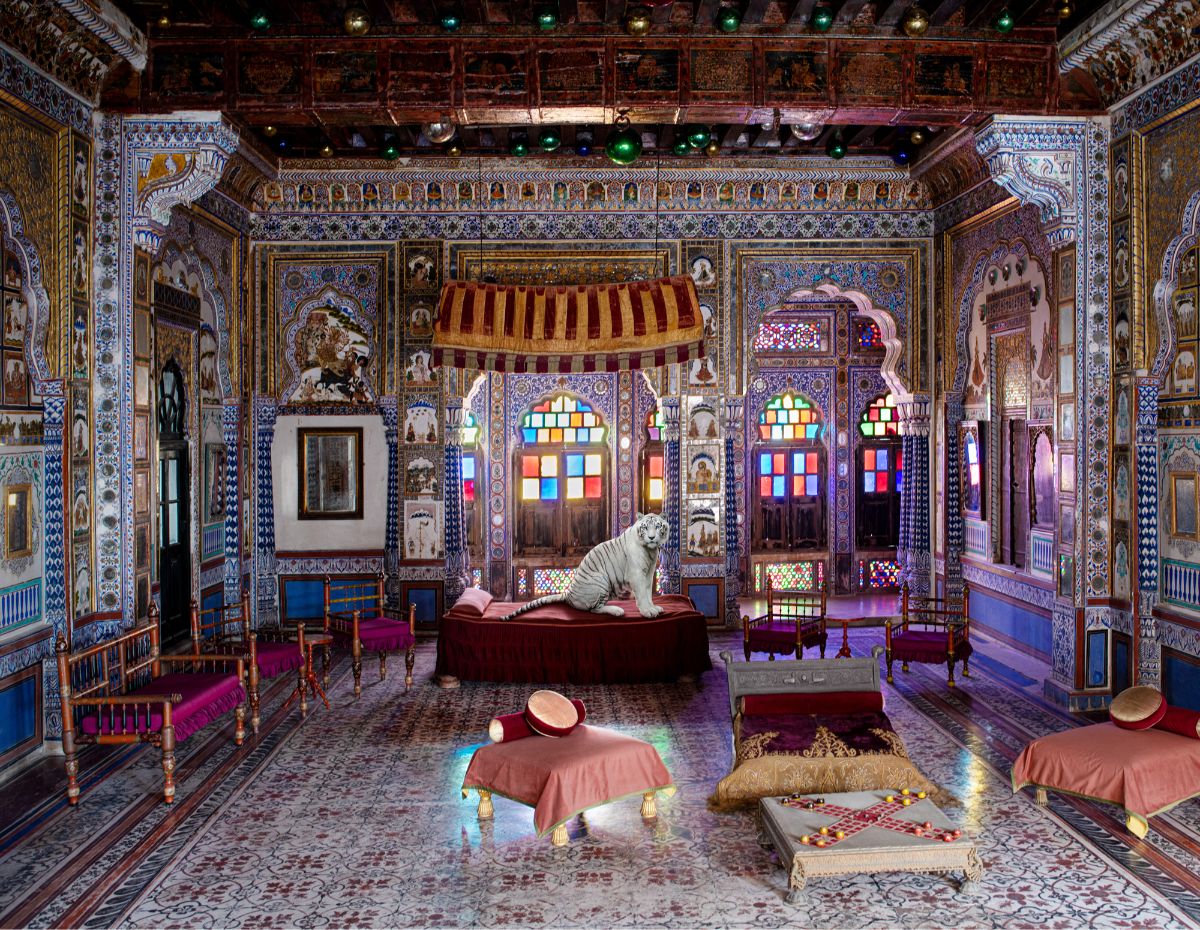
Karen Knorr, The Transgressor, Takhat Vilas, Jodhpur, 2022 Image: Courtesy of Sundaram Tagore Gallery © Karen Knorr

Born in 1961 into one of India’s most culturally prestigious families, Tagore spent his early years in Kolkata. His great-granduncle Rabindranath Tagore was a poet and painter who became the first Asian and non-European to win the Nobel prize in literature. His father was the renegade painter Subho Tagore, who co-founded the Calcutta Group, India’s first modern art movement, which drew inspiration from the Bloomsbury Group.

“[My upbringing] has shaped me in a big way, but I never played that game,” Tagore says. “I’ve noticed that [in] my family the people that have done well never relied on their name.” Tagore is a writer, art historian, film-maker and scholar. At Oxford his postdoctoral degree examined the ways in which non-western societies interpreted modernism by re-engaging with tradition.

“The very basis of modern art is rejection of tradition,” Tagore says reflectively. “If that’s the case, how does a great traditional society like India, or Indonesia, or any of these cultures make it work?” This fascination with syncretism and cultural cross-pollination is reflected in the contemporary artists Sundaram Tagore represents. His gallery showcases a global roster of artists who traverse geographical and cultural boundaries, skilfully deploying forms, techniques and philosophies from Asia, the subcontinent and the Middle East.

Tagore is sharply attuned to global art trends, but he has an ambivalent relationship with the market. “When I joined the art world, we used to call it the art world,” he says. “Today we only call it the art market. What is happening?”

His recruitment “strategy” is and always has been instinctive. “I’ve taken artists who I felt, in my gut, were really, really significant. Today the market has gone crazy [for them], but I didn’t manipulate the market. I didn’t get a consortium together.”

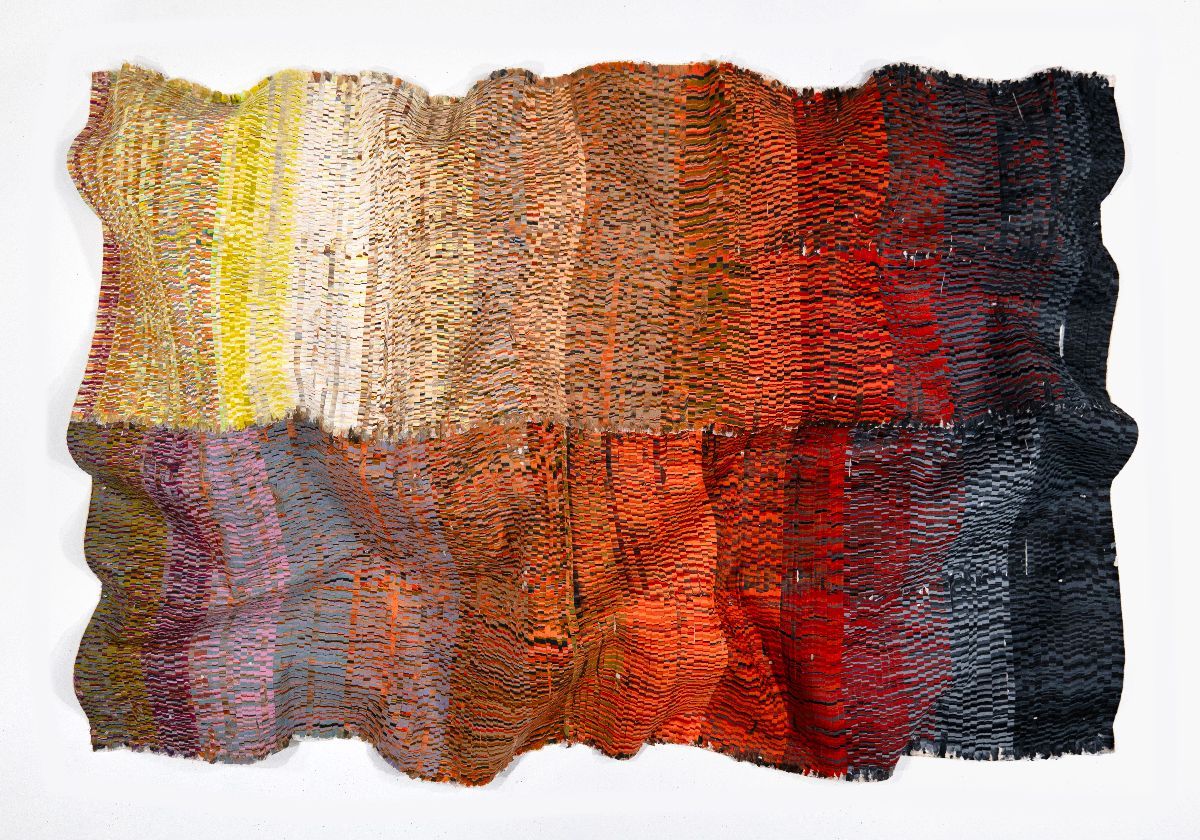
Ncounter Series No 45, 2025, Kenny Nguyen Images: Courtesy of Sundaram Tagore Gallery

In the high-stakes world of contemporary art, everything is a gamble. Tagore just seems to have a knack for taking calculated risks. “Primary art is betting. It’s always a bet,” he says with a grin. “I’ve been to Macau and Las Vegas with clients who dragged me there. It’s a great time for me to sleep because I don’t need to gamble. I’m gambling every single day.”

What is it that he is looking for in an artist? “I really believe in the hand of the artist in whatever form, and the vision they are able to execute. A lot of our really important artists are from Asia, so they’re tackling this enormous tradition. How do they make it modern and contemporary? It’s the materiality. The tactility. That becomes very important for us.”

This would be true of New York-based artist Hiroshi Senju, whose vast waterfall paintings are derived from a technique and language rooted in abstract expressionism and traditional Japanese painting. Tagore first encountered him at the 1995 Venice Biennale.

That tactility also informs the work of the Singaporean artist Jane Lee, who layers, mixes, winds, wraps, kneads and daubs her canvases, which bear the marks of her kinetic quest to interrogate the function of painting. It is also embodied in the work of the Vietnamese artist Kenny Nguyen, who produces sensuous, three-dimensional “deconstructed paintings” by tearing swathes of silk fabric into hundreds of strips that are dipped in acrylic paint and adhered to raw canvas.

Tagore says he wants those who visit his gallery to find solace from excessive, all-consuming digitalisation. In this time of clicking, scrolling and swiping, looking at art can be a form of meditation. Perhaps even a pilgrimage.

“You’re walking through that space,” Tagore says. “You’re in a dialogue. You’re engaged with the artworks, and that takes you off this constant jarring issue of ping, ping, ping, text, WhatsApp and emails and all of that. You’ve taken off.”

sundaramtagore.com

Mayfair Times Newsletter

Sign up to our free newsletter to receive exclusive stories from one of the world’s most affluent communities straight to your inbox