Sir Trevor Nunn on his must-see new theatre show, Speculations

The legendary director tells us about his extraordinary career, from his new thriller that investigates the truth behind the deaths of Marilyn Monroe and President Kennedy to the day he wrote the show tune Memory for the hit musical Cats

Sir Trevor Nunn on his must-see new theatre show, Speculations
  • Jonathan Whiley

  • Nov 09, 2026

  • Culture

Where were you when JFK was shot? For Sir Trevor Nunn, arguably Britain’s most celebrated theatre director, the memories of November 22, 1963 are vivid. “I was just starting work in the professional theatre,” he tells me across a table in a modest upstairs room of The Marylebone Theatre after a day of rehearsals.


“I miraculously got a job as an assistant at the Belgrade Theatre in Coventry. I was coming out of seeing a production and the woman behind the bar just outside the auditorium said: ‘Oh, did you hear? They have shot the president of America.’ It was devastating. At that stage the story was that he had been rushed to hospital and then, about half an hour later, the same lady behind the bar said he had died. It was just so beyond belief.”


Sixty-three years on from that fateful day, Trevor, 86, is about to put a cat among the political pigeons with the world premiere of Speculations – a thriller that places the “unexplained” deaths of President Kennedy, Lee Harvey Oswald (Kennedy’s assassin) and Marilyn Monroe in the spotlight. Written by Torben Betts, it stars Janie Dee as the American journalist Dorothy Kilgallen, who, in 1965, sets out to discover the truth on a trail that leads from Hollywood to the White House.
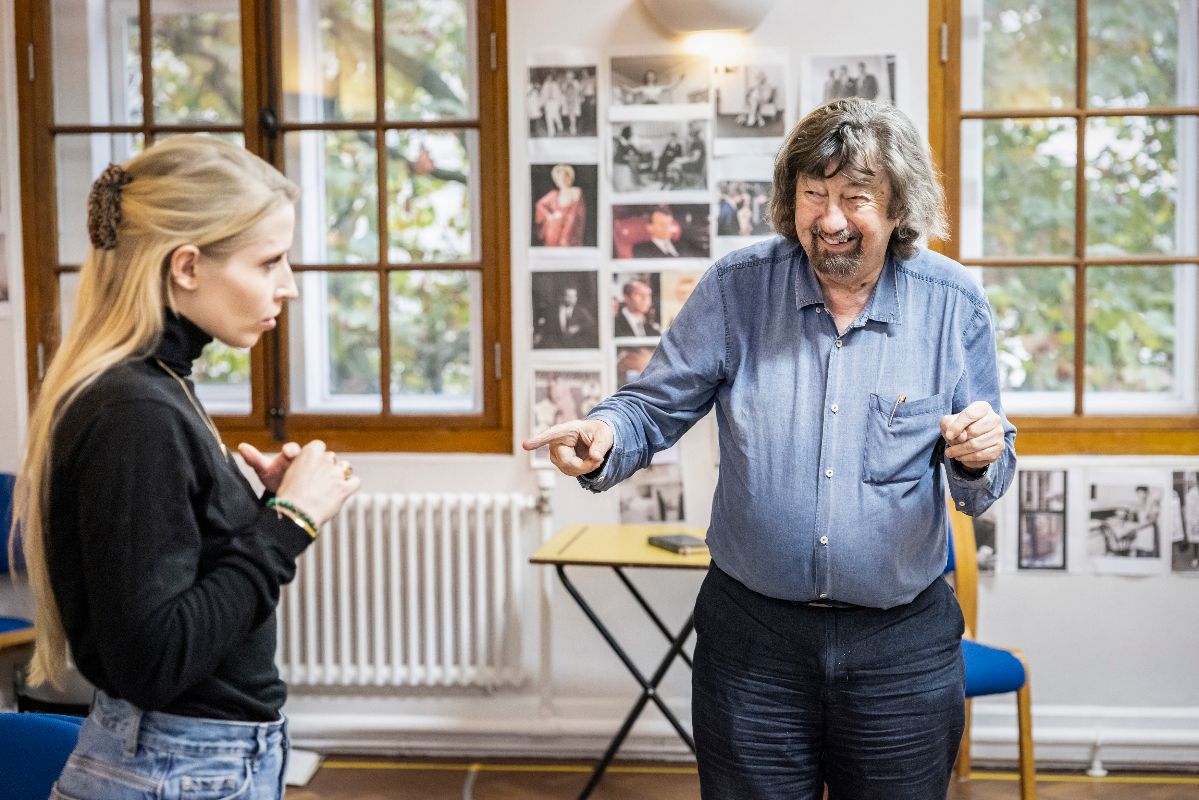
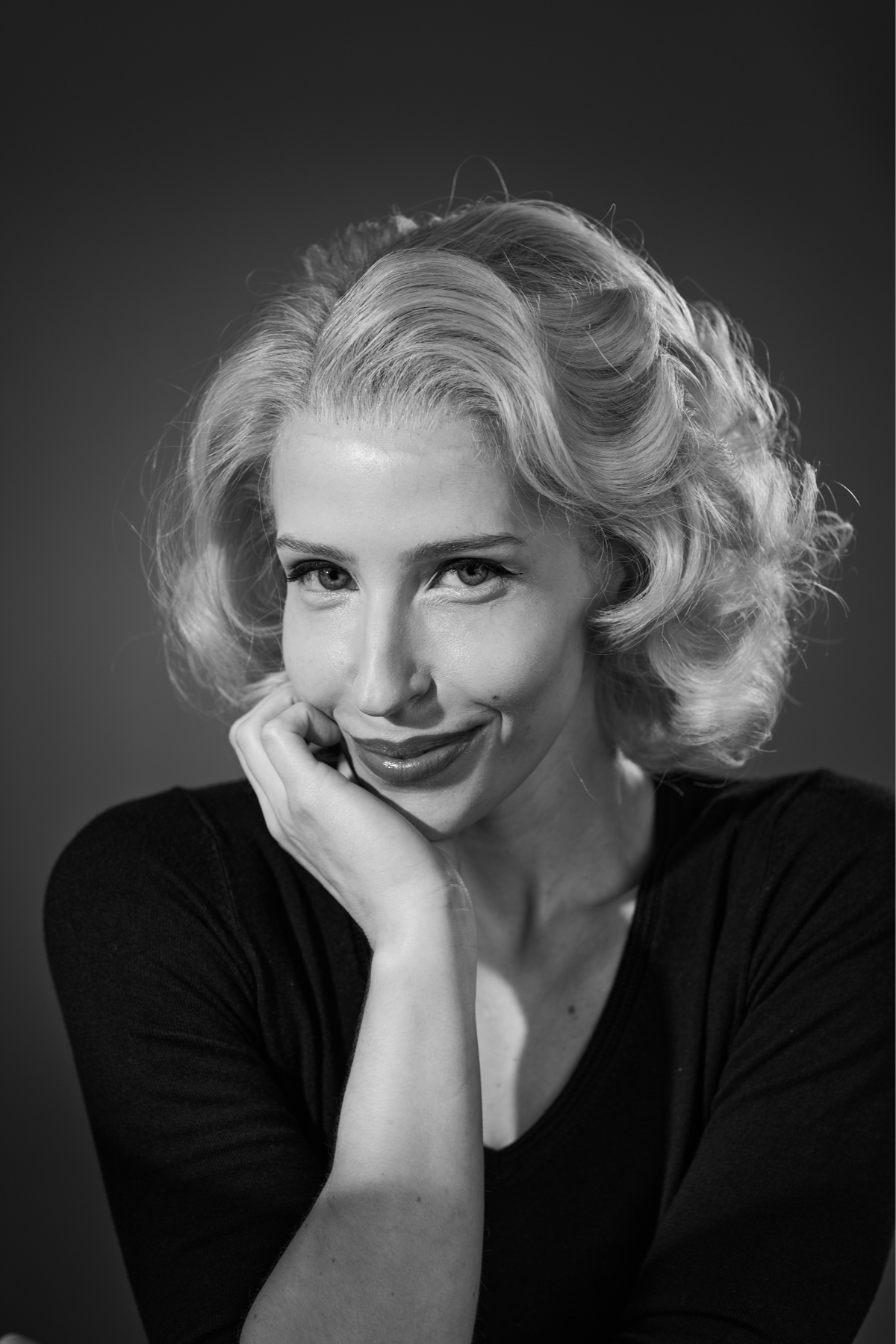
Natalie Dunne and Sir Trevor Nunn

Trevor is intrigued by the contradictions surrounding the assassination of JFK. “The contradictions are Lee Harvey Oswald, a young communist who was tied up with communist Cuba, acted entirely on his own in discovering where the Kennedy car procession was going to be, getting access to the book depository and providing himself with a gun.”

Even the death of Oswald, he adds, should be examined. Two days after JFK was assassinated, Oswald was shot in the basement of the Dallas police headquarters. “He is being taken towards a court where he is going to be put on trial. There are police everywhere and yet somehow a nightclub owner called Jack Ruby can just step out and shoot him dead. Oh, did Ruby have anything to do with the mafia? Those questions were being whispered back then, but now I’m doing a play where those questions are loud and audible.”

What does he believe actually happened? “I think largely the mafia were involved in the decision to eliminate Kennedy because they had helped Kennedy to the presidency and then, fairly soon after, he launched a cleansing of the mafia campaign that came after them. There was great rage in the mafia and therefore they had to punish him for that I think.”

And what of Monroe? She was found dead in her Los Angeles bed in 1962 at the age of 36; recorded as “probably suicide” from a barbiturate overdose. Trevor suggests it’s far more complicated. “Subsequent investigations raised huge questions of whether it was suicide. What we now know is that there had been a relationship between JFK and Marilyn, a physical relationship. There was rumour mongering about what her relationship may have been with the Kennedys and consequently, did she know too much where she could become a threat to the Kennedy family?”

Will the truth ever come out? “Oh, if you come and see this play then you will absolutely 100 per cent be convinced that the truth has been revealed,” he says. He tells me Dorothy Kilgallen was about to publish a tell-all book before receiving a “number of peculiar, strange threats”. “Then, just before the book is published, she is found dead and the manuscript has disappeared.”

Jolyon Coy as Robert F Kennedy, Photo: Robert J Wilson
Natalie Dunne as Marilyn Monroe, Photo: Robert J Wilson

Trevor’s career is extraordinary. He joined the Royal Shakespeare Company in 1964 (becoming its youngest ever artistic director in 1968) before a role as director of the National Theatre from 1997 to 2003. He continually attributes much of his success to luck. The son of a carpenter and a seamstress, he tells me how he idolised his “wonderfully articulate and charismatic” English teacher at grammar school in Ipswich. “He lived in a windmill – fabulously eccentric – with his wife and children and on Friday nights he gave a literature class, usually talking about Shakespeare plays.

“He took it into his head at some point that he should help me to get into a major university and he thought Cambridge was the right idea. He gave me before-school lessons, lunchtime lessons, after-school lessons and I responded with every fibre. Watching him direct the school play was part of it and while I loved being in plays, very early on I knew about this other job; this conceiving of how a play could be presented.”

After winning a scholarship to Cambridge, Trevor got a job at the Belgrade Theatre. “Then unbelievably, one evening, the lady at the bar said: ‘There is a gentleman in the director’s office who wants to have a word with you.’ I tapped on the door and I found myself looking at Peter Hall and his wife, Leslie Caron. Peter said: ‘We’ve been following your work. I’d love you to come over to Stratford for a meeting.’”

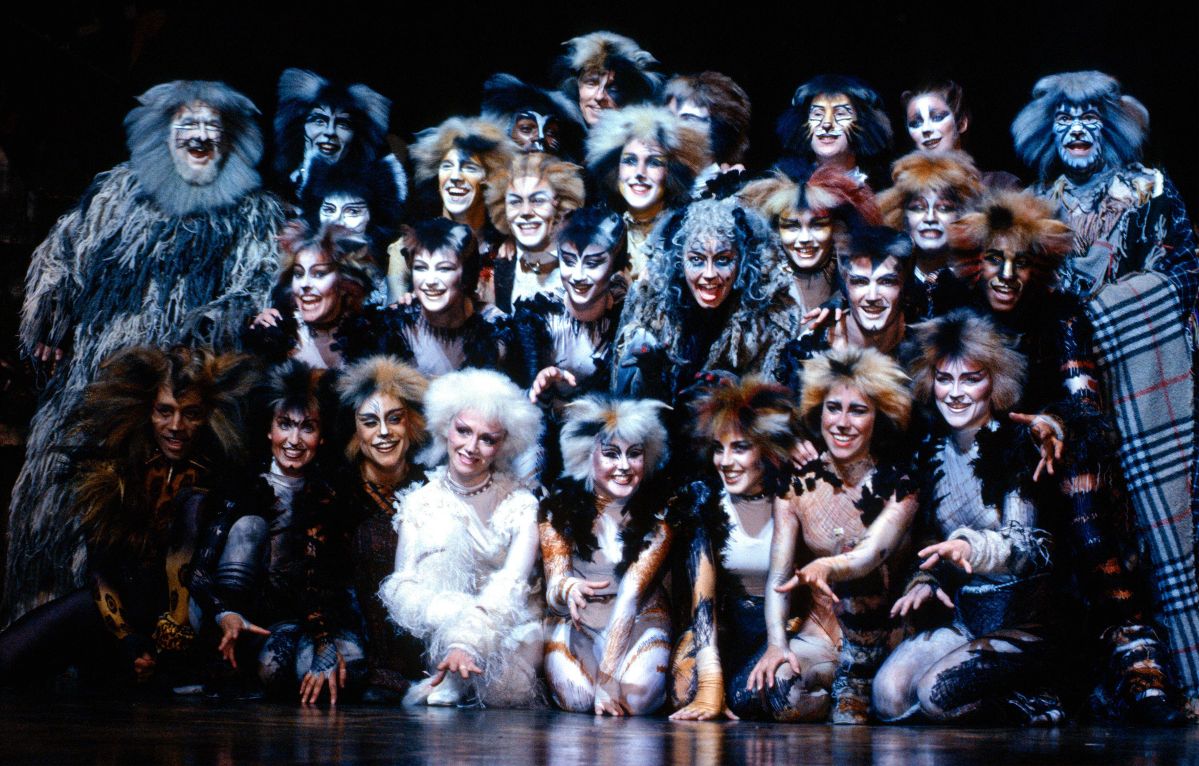
Eighth anniversary cast of the musical Cats at the New London Theatre, 1989

The rest, as they say, is history. Hall, who founded the Royal Shakespeare Company, would later hand the reins to Trevor, then 28. “He asked me to go into his office and said he had decided to move on and the person he thought should take over was me. I said: ‘Peter, stop it!’ I scarcely knew how to run a rehearsal.” Trevor would go on to direct all 37 Shakespeare plays, the original production of Cats, Starlight Express and Sunset Boulevard, and win Olivier and Tony awards. 

Cats emerged from a meeting with Andrew Lloyd Webber in which Trevor, who had studied TS Eliot’s poetry at university, persuaded him that Old Possum’s Book of Practical Cats was a satirical work for adults, not children. “He said: ‘Oh, you might be interested in this musical I’m putting together.’ Boom! I found myself directing a show called Cats. Everyone thought a show where all the characters were cats was insane and Lloyd Webber had lost his marbles.”

For Trevor, there was more luck to come (his words) after a meeting with Eliot’s widow. “Valerie had found a sheet of typescript called Grizabella the Glamour Cat.” Lloyd Webber created a melody and gave Trevor a tape. “We approached all the main lyricists of the day and they all said: ‘No, it’s not for me.’ That weekend I sat down and read two or three Eliot poems again and I wrote a lyric called Memory.”

The tune was first recorded by Elaine Paige before Barbra Streisand took it to number one worldwide. “When people play it on the radio all over the world and you are getting a royalty, it enables you to eventually buy a nice little property out in the country. Thank you, Barbra!” And what of Mayfair and St James’s? Trevor says he is a weekly visitor. “I love The Wolseley and I have had key meetings there for the past 20 years. They always reserve one table for me, it’s a lovely corner table. I’m very lucky. Lucky, lucky, lucky.”

Speculations is at The Marylebone Theatre until January 3; marylebonetheatre.com

Mayfair Times Newsletter

Sign up to our free newsletter to receive exclusive stories from one of the world’s most affluent communities straight to your inbox